Home Electrical Emergencies: What to Do Before the Electrician Arrives
Imagine this: It’s late at night. Suddenly, the lights flicker, then go out. You hear a strange buzzing. Maybe you smell something burning, or see sparks dancing behind an outlet. Your heart pounds—what should you do before the emergency electrician arrives?
Electrical emergencies hit when you least expect them. At Alentar Electric, we know how overwhelming it feels. Your priority? Stay safe. Here’s a clear, practical guide for homeowners—so you don’t have to guess in a crisis.
Recognizing an Electrical Emergency ⚡
Understanding what truly counts as an emergency is step one. Not every outage is a disaster, but some situations are red flags that demand urgent action:
- Power Outages: If your home is the only one on the street without power, something’s wrong inside.
- Sparking Outlets: Sparks, crackles, or burned marks on outlets mean danger.
- Burning Smells: If you catch a whiff of melting plastic or smoke, act fast.
- Exposed Wires: Dangling or frayed wires are an open invitation for shocks.
- Electrical Fires: Flames or glowing embers at outlets, switches, or appliances.
- Repeated Breaker Trips: If breakers keep flipping off, don’t ignore it.
If it feels “off” or dangerous, it probably is. Trust your instincts.
Storm- and Weather-Related Emergencies
Storms bring more than rain. Lightning, wind, and flooding can knock down power lines or flood panels. After a storm:
- Watch for puddles near outlets or appliances. Water and electricity do not mix.
- Be extra careful if you have a generator. Only use backup generators near you outdoors, never inside.
- If trees or branches take down lines, stay at least 30 feet away—call professionals.
If Someone Receives an Electrical Shock
Seconds matter. If a family member touches a live wire and can’t let go:
- Don’t touch them directly. You could get shocked, too.
- Turn off the main breaker if possible.
- Use a dry, non-metal item (like a wooden broom handle) to separate them from the source.
- Call 911 immediately.
- Once safe, check for breathing and pulse. Start CPR if needed.
Immediate Safety Steps
In an electrical emergency, you’re the first responder until help arrives. Here’s what to do:
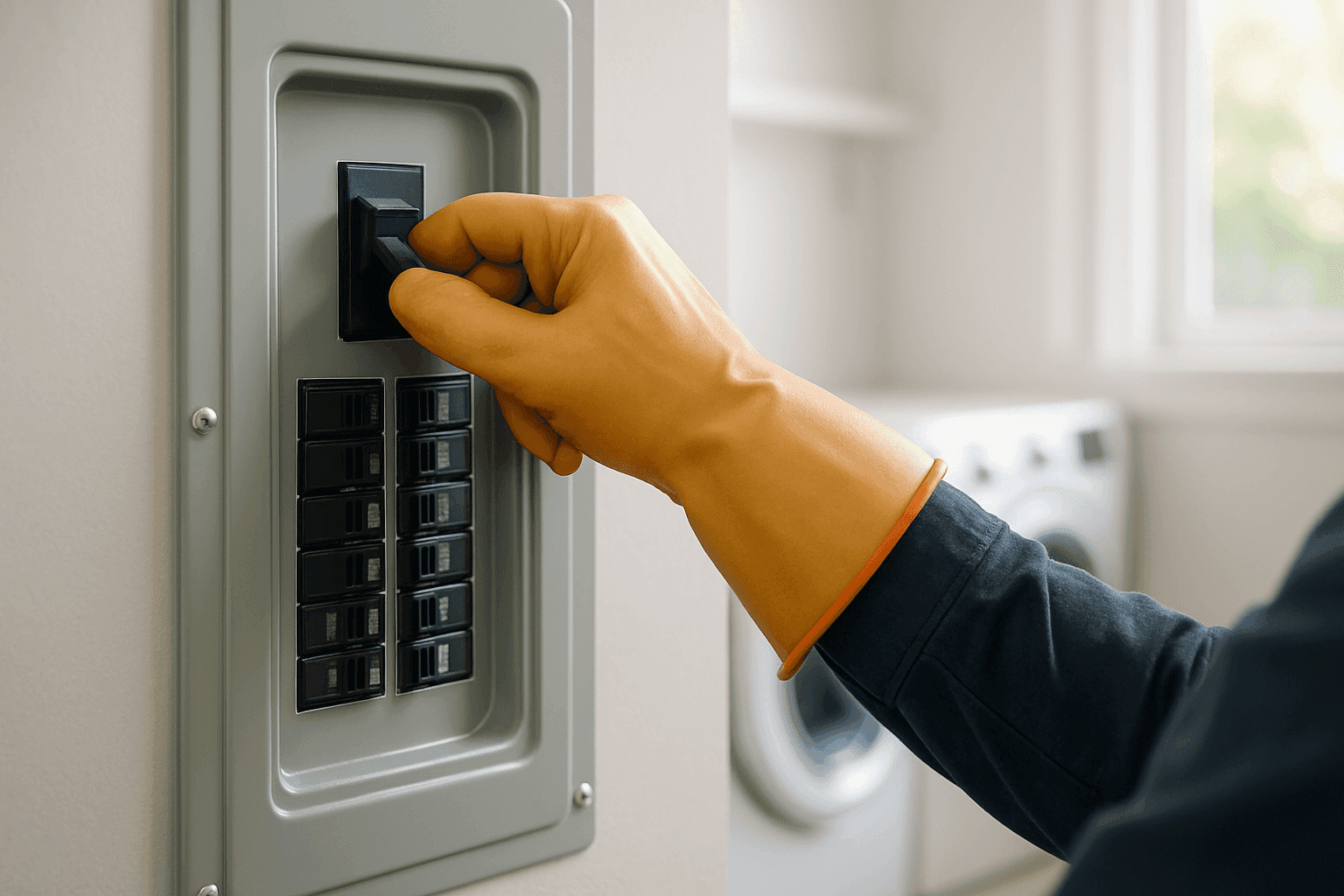
- Turn off the main power at your breaker panel—if it’s safe and you can reach it without stepping in water or touching anything hot.
- Unplug devices if you see smoke, sparks, or suspect an appliance is the source.
- Evacuate if you see flames, heavy smoke, or feel unsafe. Get everyone outside.
- Keep a fire extinguisher handy—but only use a Class C extinguisher for electrical fires. Water makes it worse.
- Keep kids and pets clear of the area.
Every second counts, but so does your safety. Don’t take risks you’re unsure about.
When to Call an Electrician
Some repairs can wait until morning. But these can’t:
- Flickering lights after a storm
- Outlets or switches that feel hot
- Sparking or buzzing panels
- Breakers that won’t reset
- Any sign of electrical fire, smoke, or burning odor
- Flooded electrical panels or outlets
Don’t try to “tough it out.” Call an emergency electrician right away. Be ready to describe what happened, what you see, and any actions you’ve already taken. The more detail you can share, the faster the solution.
Preventing Further Damage 🛑
Once you’ve called for help, your next job is to stop things from getting worse:
- Don’t use water to put out electrical fires.
- Don’t turn devices back on—wait until a pro gives the all-clear.
- Move valuables (if safe) away from smoke, water, or sparks.
- Warn others not to enter the danger zone.
- Keep flashlights handy instead of candles during outages.
Simple steps now can save you from expensive repairs or worse.
DIY vs. Call a Pro
Let’s be clear: electrical systems aren’t like fixing a leaky faucet. Electricity is invisible but deadly. The National Fire Protection Association (NFPA) and the U.S. Consumer Product Safety Commission stress—don’t attempt repairs unless you’re licensed and trained.
What you can do:
- Flip breakers off
- Unplug appliances
- Call for help
What NOT to do:
- Open panels or try to “fix” wiring
- Tape or cover exposed wires
- Use water on any electrical issue
Trying to handle it yourself is like playing with fire in a dry forest.
What Emergency Electricians Do On Arrival
When a professional arrives, they’ll:
- Assess the situation, starting with the main panel
- Test circuits and outlets with specialized equipment
- Identify root causes—faulty wiring, overloaded circuits, damaged appliances
- Repair or make safe, following the National Electrical Code (NEC)
- Advise you when it’s safe to restore power
If permanent repairs can’t be made immediately, they’ll secure the area and return as soon as possible.
Preventing Electrical Emergencies
A little foresight goes a long way. Here’s how to reduce your risk:
- Schedule annual safety checks—especially before storm or freeze season.
- Upgrade old outlets and breakers
- Install surge protection for sensitive electronics.
- Don’t overload outlets with power strips or big appliances.
- Keep backup generators near you serviced and ready.
- Test smoke and carbon monoxide detectors monthly.
- Ask about whole-home surge protection and AFCI/GFCI outlets
Prevention costs less than emergency repairs—and it may save lives.
Costs & Time Factors
No two emergencies are the same, but here’s what affects time and cost:
- Severity: Minor issues (like a tripped breaker) may take under an hour. Widespread damage or fire can require several visits.
- Parts needed: Older homes may need new breakers, outlets, or wiring.
- Time of day: After-hours, holidays, or weekends may cost more.
- Access: Hard-to-reach wiring or panels can add time.
Always ask your electrician for a clear explanation before work begins.
When It’s an Emergency (and When It’s Not) 🚨
Call immediately if:
- You see flames, smoke, or sparking
- You smell burning plastic or wiring
- You’ve lost power and neighbors haven’t
- Flooding near outlets or panels
Wait for regular service if:
- A single light won’t turn on (check bulbs and breakers first)
- You hear a faint buzz but see no damage
- You want to upgrade outlets or add fixtures
If in doubt, err on the side of caution.
FAQ: Electrical Emergency Questions
Q: Should I try to reset the breaker if it keeps tripping?
A: Once or twice is okay. If it keeps tripping, stop and call an emergency electrician. Continuous trips mean deeper problems.
Q: Can I use my backup generator indoors during an outage?
A: Never. Always run backup generators near you outdoors. Indoor use can lead to deadly carbon monoxide poisoning.
Q: How do I know if an outlet is safe after a power outage?
A: If you see no damage or smell, wait for an electrician to inspect before plugging in expensive devices.
Q: What’s the fastest way to get help?
A: Call your emergency electrician and be ready to describe the problem. Photos help, but safety first.
Local & Seasonal Risks
Weather shapes electrical emergencies. Each season brings its own hazards:
- Storms: Downed lines, surges, and flooding are common. Have flashlights, batteries, and a storm plan.
- Winter Freezes: Ice can snap lines and freeze outdoor panels. Keep outdoor GFCIs clear.
- Holidays: Extra lights and kitchen gadgets can overload circuits. Don’t plug too much into one outlet.
- Summer Heat: Air conditioning units can strain older systems. Schedule a pre-summer checkup.
Stay alert, especially during storms or when using lots of holiday decorations. The more you prepare, the less you’ll worry.
No one chooses when an electrical emergency strikes. But you can choose how you respond. Stay calm. Follow the steps above. And never risk your safety for a quick fix.
Call Alentar Electric now — or reach us anytime at 855-513-8853 .